
Scoped dashboards
Available in supported workspaces unless marked as roadmap elsewhere.
Solution
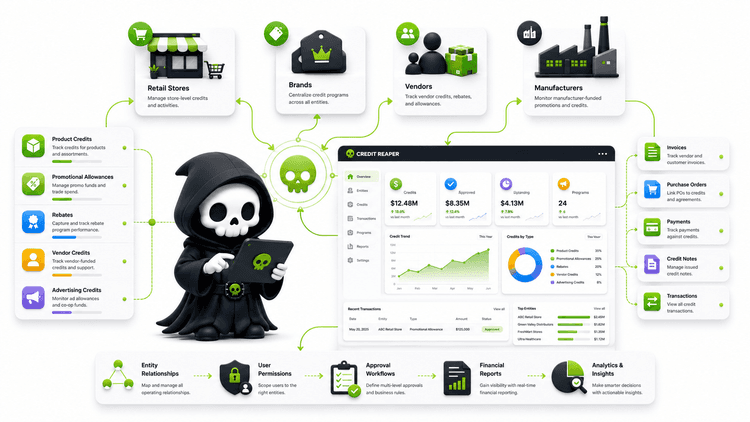
Stores can see the credit lines they are allowed to access, the available-balance movement behind them, and the notes tied to transactions.
Stores
Store teams often use credit from multiple brands or vendors, but eligible products, usage limits, proof requirements, and balance activity live across messages, invoices, and partial spreadsheets.

Credit Reaper connects credit lines, transactions, notes, activity, reports, and access scope around the relationship instead of a loose spreadsheet total.
Example workflow
Each workflow can start small and expand as more entities and users come into the system.
Relevant features
Available in supported workspaces unless marked as roadmap elsewhere.
Available in supported workspaces unless marked as roadmap elsewhere.
Available in supported workspaces unless marked as roadmap elsewhere.
Available in supported workspaces unless marked as roadmap elsewhere.
Next step
Create a workspace to map entities, credit lines, transactions, evidence, and scoped access around this workflow.